Make It Harder: Why the Best Creatives Are Deliberately Choosing Difficult Tools
Everything about modern software is designed to get out of your way. Auto-correct your typos. Suggest your next sentence. Generate your placeholder copy. Smooth out the rough edges before you even notice they're there. And honestly? For a lot of tasks, that's great. Nobody needs friction when they're scheduling a dentist appointment.
But here's a question worth sitting with: What happens to your creative thinking when every tool you use is engineered to make thinking optional?
A growing number of designers, writers, filmmakers, and founders are asking exactly that. And their answer is making people uncomfortable—because it involves choosing harder tools on purpose.
The Problem With Frictionless
Frictionless is a selling point. It's on the landing page of basically every SaaS product launched in the last decade. And there's a real reason for that—friction costs time, causes frustration, and drives churn. From a product design standpoint, removing it makes complete sense.
But creative work isn't a product funnel. It's a thinking process. And when the process gets too smooth, something quietly disappears: the moments where you're forced to stop, reconsider, and actually make a decision.
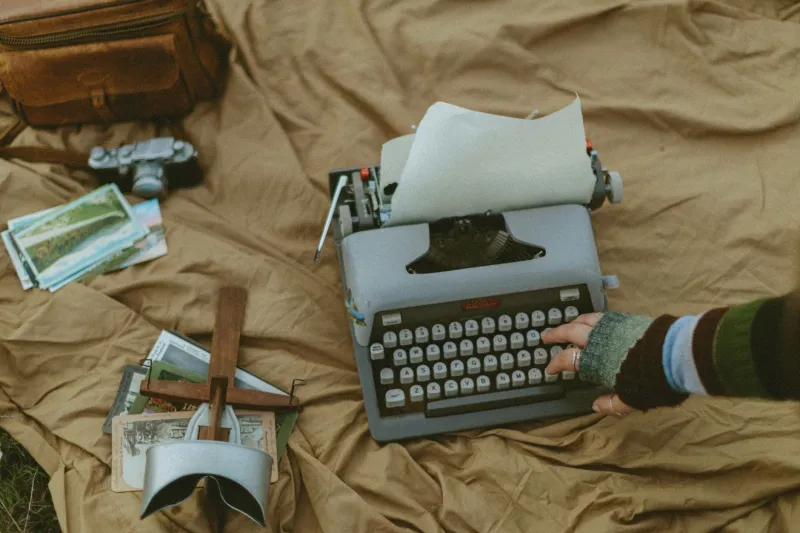
Think about the difference between typing a quick email and writing a letter by hand. The act of slowing down—of physically forming each word—changes what you say and how you say it. You edit before you write. You weigh your words differently. The friction of the medium shapes the quality of the output.
This isn't nostalgia. It's cognitive science. When tasks require more deliberate effort, we engage deeper processing systems. We move from autopilot to actual thought.
Choosing Your Resistance
For Brooklyn-based graphic designers shooting on film cameras alongside their digital setups, or screenwriters drafting on manual typewriters before moving to Final Draft, the choice isn't about being contrarian. It's about what the difficult tool demands of them.
Film has a fixed number of exposures. That constraint forces intentionality with every frame. A typewriter can't let you undo a sentence—so you think the sentence through before you commit. These aren't limitations to work around. They're the entire mechanism.
The same logic applies to software. Some motion designers swear by older versions of After Effects that lack modern shortcuts, because navigating those gaps forces them to understand what they're actually building. Certain writers still draft in plain-text editors with zero formatting options, specifically because the absence of visual fiddling keeps them locked into language.
The friction isn't the obstacle. The friction is the curriculum.
Difficult Collaborators as Creative Infrastructure
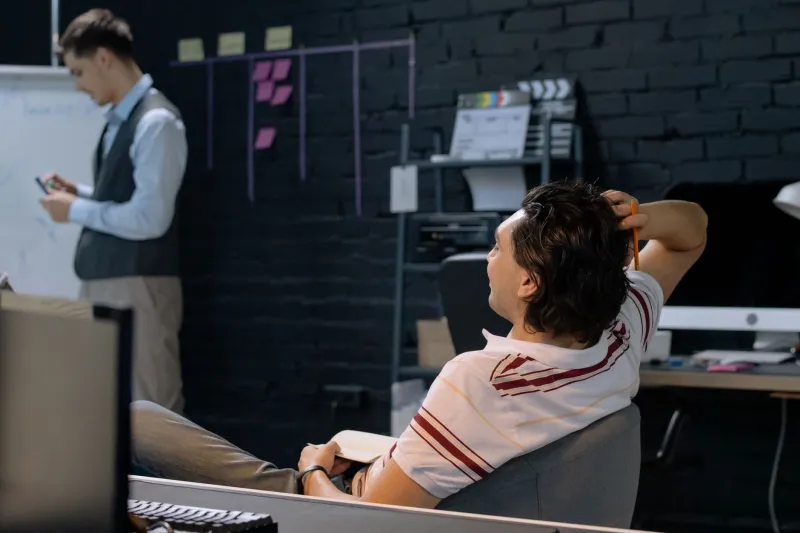
This principle extends beyond tools and into the people you work with. There's a reason some of the most creatively productive teams in the country include at least one person who pushes back on everything.
The collaborator who asks "why are we doing it this way?" when everyone else has moved on. The creative director who refuses to approve work that doesn't have a clear point of view. The editor who sends your draft back with more questions than answers.
These people are exhausting. They're also invaluable. Because without resistance, creative work tends to drift toward the comfortable and the conventional. The path of least resistance in a brainstorm is usually the most obvious idea in the room.
Difficult collaborators are human friction. They slow the process down at exactly the moments when speed would lead to mediocrity.
The Shallow Work Filter
Here's what's interesting about choosing harder tools: they act as a natural filter for shallow creative choices.
When every move costs you something—time, effort, deliberate attention—you stop making moves you can't justify. You don't try a font because it was in the suggested options. You don't use a transition because the software made it easy. You make choices because you've thought them through.
This is where the real value of friction shows up. Not in the struggle itself, but in what the struggle eliminates. Lazy decisions. Default settings. The creative equivalent of filler words.
Some of the most distinctive visual identities, the most memorable writing, and the most original products in the market right now came from people who were working against something. A budget that forced ingenuity. A tool that wouldn't cooperate. A timeline that made the obvious solution impossible.
Constraint has always been the mother of invention. Deliberate friction is just constraint you choose for yourself.
This Isn't Anti-Technology
Let's be clear: this isn't a manifesto against modern tools. AI, automation, and intuitive software are genuinely powerful—and using them strategically is part of how smart creatives compete.
The point isn't to make everything hard. It's to be intentional about where you allow ease and where you introduce resistance.
Maybe your production workflow is fully optimized and automated. Great—that frees up cognitive bandwidth. The question is what you're doing with that bandwidth. Are you putting it toward deeper creative thinking, or just filling it with more frictionless output?
The creators who are doing genuinely interesting work right now tend to have a clear answer to that question. They've automated the routine so they can make the important stuff harder.
Finding Your Friction
If you want to experiment with this, you don't have to throw out your MacBook and start chiseling type into stone tablets. Start smaller.
Try drafting your next big pitch by hand before you open a slide deck. Switch to a text editor with no formatting for your next writing project. Spend a week shooting photos on your phone with no filters, no editing apps—just composition and light. Add one person to your next creative review whose job is specifically to challenge the direction.
Pay attention to what those constraints surface. What decisions do you actually have to make when the tool stops making them for you? What ideas come up when you can't rely on the software's suggestions?
You might be surprised how much sharper everything gets when things stop being easy.
The best creative work has always lived just past the point of comfort. Frictionless gets you to average faster. Friction gets you somewhere worth going.