Hands On, Head Clear: Why Some of the Sharpest Creatives Are Saying No to AI
There's something almost punk rock about it. At a moment when every creative professional is being told to embrace AI or get left behind, a stubborn, passionate, and surprisingly large group of makers is doing the opposite. They're closing the browser tabs, shelving the subscriptions, and returning to tools that require sweat — actual, honest-to-goodness human effort.
This isn't Luddism. These aren't people who don't understand the technology. In fact, many of them helped build it, championed it, or were early adopters. What they're staging is something more interesting: a deliberate, considered rejection of the path of least resistance.
Call it the analog rebellion. And it's more radical than it sounds.
The Paradox at the Center of It All
Here's the contradiction that makes this movement so fascinating: the people opting out of AI tools aren't doing it because they think AI is stupid. They're doing it because they think they might get stupid if they rely on it too much.
Marcela Reyes, a brand identity designer based in Austin, put it bluntly in a recent conversation: "Every time I let the algorithm suggest a color palette or generate a mood board, I felt a little less like me. The output was fine. It was totally fine. That's the problem — 'fine' is the enemy of great."
She's not alone in this line of thinking. Across disciplines — from UX design to copywriting to independent filmmaking — creatives are articulating a similar unease. When you outsource the struggle, you also outsource the discovery. And discovery, they'll tell you, is where the real work lives.
Constraints Are the Point
There's a well-established body of creative theory that says limitations don't stifle genius — they ignite it. Jack White famously limited himself to a three-piece band to force himself to get more inventive with fewer resources. Dr. Seuss wrote Green Eggs and Ham on a bet that he couldn't write a compelling book using only 50 words. The constraint wasn't a handicap. It was the whole game.
The creators opting out of AI are essentially engineering constraints for themselves in an era of infinite computational assistance. They're saying: I could have the machine do this, but what happens to my brain if I let it?
Jordan Fitch, a freelance copywriter in Brooklyn who publicly documented his three-month "AI fast" on his newsletter, described what he found on the other side of it. "The first two weeks were genuinely uncomfortable. I was slower. I second-guessed myself more. But around week four, something cracked open. I started writing sentences I'd never written before because I couldn't reach for a shortcut. I had to actually think."
His newsletter subscribers doubled during that period. The work was messier and more personal — and readers felt it.
What We Lose When We Outsource Our Thinking
This is where the conversation gets a little heavier. Because it's not just about better output. It's about what kind of thinkers we become over time.
Neurologically speaking, skills we don't use tend to atrophy. Navigation apps have measurably reduced our spatial reasoning abilities. Autocorrect has made us worse spellers. These aren't moral failings — they're predictable outcomes of offloading cognitive labor to machines.
The creatives in this movement are asking: what happens to our imaginative muscles if we stop using them? What happens to our editorial instincts, our compositional sensibility, our voice — that ineffable, irreplaceable thing that makes one human's work distinct from another's?
Sarah Okonkwo, an illustrator and muralist out of Atlanta, frames it this way: "My hand knows things my brain hasn't figured out yet. When I draw, I'm in a conversation with myself. If I'm just prompting a model, I'm not in that conversation anymore. I'm a project manager. And I didn't get into this to manage projects."
The Bold Choice Nobody's Talking About
Here's what's genuinely countercultural about this moment: in an industry culture obsessed with productivity, efficiency, and scaling output, choosing to go slower is a radical act. Choosing to struggle is a radical act. Choosing to be inefficient — on purpose — because you believe the process makes the product is something most people in creative industries are afraid to say out loud.
But the people doing it aren't apologetic. They're energized.
And there's a market argument here too, not just a philosophical one. As AI-generated content floods every corner of the internet, the work that carries unmistakable human fingerprints is becoming rarer — and more valuable. Collectors, brands, and audiences are increasingly hungry for things that feel like they came from somewhere real.
The analog rebels aren't just preserving their creative souls. They may be building a competitive moat.
This Isn't Forever — It's a Statement
Most of the creators in this movement aren't claiming they'll never use AI again. That's not really the point. What they're after is intentionality — a deliberate, eyes-open relationship with their tools rather than a reflexive, default one.
Marcela Reyes put her AI tools back into rotation after six months away. But something had shifted. "Now I use them like I use a calculator," she said. "For specific tasks where speed matters and the thinking is already done. But the thinking? That's mine. I'm not giving that away."
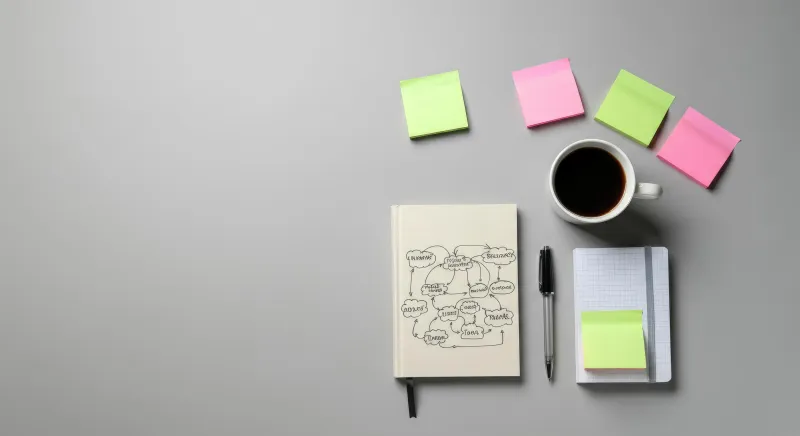
That distinction — between using a tool and being used by one — is what the analog rebellion is really about. And in a creative landscape increasingly shaped by automation, the boldest thing you can do might just be to pick up a pen.
Think different, indeed.