Break Your Own Rules First: How Creative Rebels Use Constraints as Superpowers

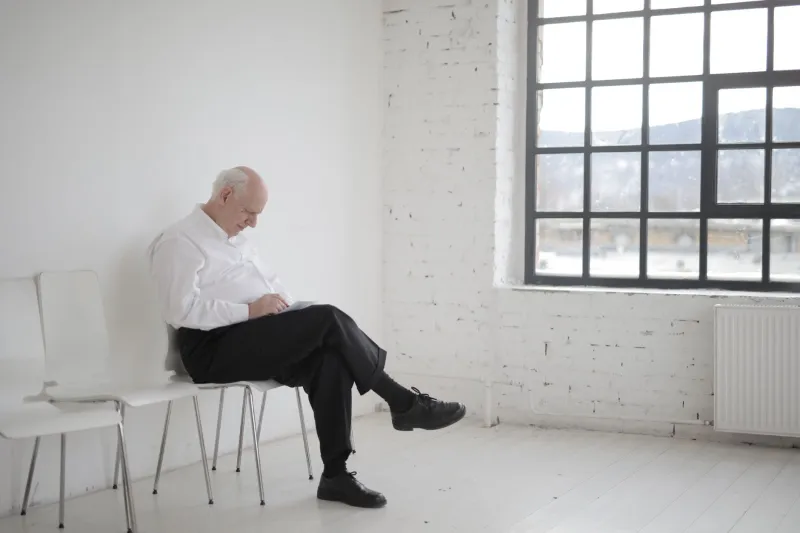
Photo by Photo by Theme Photos on Unsplash on Unsplash
Here's a counterintuitive truth that the creative world's most interesting minds have quietly known for years: freedom is overrated.
Not the philosophical kind — the blank-canvas, infinite-budget, do-whatever-you-want kind. That version of freedom? It's a trap. Ask any designer who's ever stared at an empty Figma board for three hours or any writer who's ever been handed a brief that just says "be creative" with zero direction. Unlimited options don't liberate you. They paralyze you.
The rebels who are actually building remarkable things — the ones shipping products people didn't know they needed, making art that stops people mid-scroll — they're working with self-imposed restrictions. On purpose. And they're doing it with a kind of gleeful intensity that makes the whole thing look almost suspicious.
The Paradox Nobody Talks About
Psychologists have a name for what happens when you face too many choices: decision fatigue. Barry Schwartz called it the Paradox of Choice back in 2004, and two decades later it's more relevant than ever. When your options are endless, your brain doesn't expand — it seizes up.
Creative constraints do the opposite. They give your brain a problem to solve instead of a void to fill. And human brains, it turns out, are extraordinary problem-solving machines. Give them walls and they'll find the door. Give them open sky and they'll just keep looking up, unsure where to start.
That's the engine behind what we're calling the Constraint Toolkit — a set of deliberate, self-imposed limitations that some of today's sharpest creatives are using to generate their best work.
Fewer Colors, More Conviction
Take graphic designers who voluntarily limit their palettes. Not because a client told them to — because they decided to. Working with two or three colors instead of the full RGB spectrum forces a kind of intentionality that unlimited access never demands. Every choice carries more weight. Every decision has to pull double duty.
Brooklyn-based illustrator and brand designer Maya Osei talks about her "two-color rule" for personal projects: pick two colors at the start, commit to them, and figure it out from there. "When I let myself use anything, I end up using everything," she says. "Two colors means I have to be clever. I have to earn the impact."
That earned impact is exactly what makes constraint-driven work feel different. There's a tightness to it — a sense that nothing is accidental, nothing is filler.
The Budget Cap as Creative Catalyst
Entrepreneurs know this game well. Early-stage founders don't have the luxury of throwing money at problems, and some of the most iconic products in American startup culture were born from that exact limitation.
But here's what's interesting: plenty of founders who do have funding now are still voluntarily capping their spend on specific projects. Not out of frugality — out of strategy. A hard budget forces prioritization. It demands that you identify what actually matters and ruthlessly cut everything else.
Jordan Prescott, who runs a small product design studio in Austin, puts a dollar cap on every prototype phase — regardless of what the overall project budget looks like. "If I let myself spend freely in the exploration stage, I waste time on ideas that look expensive instead of ideas that work," he explains. "The cap forces me to prototype the concept, not the finish."
That distinction — concept versus finish — is where a lot of creative energy gets wasted. Constraints redirect that energy back to the core idea.
Rules You Write Yourself
Some creators go even further, building elaborate personal rule systems that have nothing to do with budgets or materials. They're more like creative constitutions — frameworks that define how they'll approach a problem before the problem even exists.
One filmmaker based in Los Angeles shoots every personal project using only available light. No rigs, no reflectors, no crew beyond one other person. It's not a stylistic choice she arrived at gradually — it was a decision she made after a bloated production left her feeling disconnected from the work. "I needed to feel the risk again," she says. "Available light means you're working with what's there. You're responding, not controlling. That's where the interesting stuff lives."
That idea — responding rather than controlling — is a thread that runs through almost every constraint-driven creative practice. Limitations put you in a reactive, adaptive mode. And adaptation, historically, is where breakthroughs happen.
The Material Restriction Play
Artists have been playing this game forever. Think of the Dogme 95 film movement, which banned non-diegetic music, artificial lighting, and genre films. Or the Oulipo literary group, whose members wrote entire novels without using the letter "e." These weren't gimmicks — they were engines.
Today's version looks different but operates on the same logic. Ceramicists who only work with locally sourced clay. Furniture makers who limit themselves to a single type of joinery. Illustrators who work exclusively in one medium — not because they can't do others, but because the restriction sharpens their eye.
When you remove the escape hatch of switching mediums or materials, you're forced to understand the one you're in. You find its edges. You discover what it can do that nothing else can. That specificity is what gives work its signature.
Building Your Own Constraint Toolkit
So how do you start? The key is that constraints have to be genuine — arbitrary or fake limitations don't generate the same creative pressure. Here are a few entry points that actual creatives swear by:
Time boxing. Give yourself a hard deadline that's shorter than comfortable. Not so short it's impossible, but short enough that you can't overthink. Thirty minutes to sketch a concept. One hour to write a first draft. The clock creates urgency that perfectionism can't survive.
Material minimalism. Pick one tool, one medium, one platform for a defined period. Resist the pull to switch when it gets hard. The difficulty is the point.
The single-sentence brief. Before you start any project, write one sentence that defines its entire purpose. Not a paragraph. One sentence. Everything you create has to serve that sentence.
The subtraction rule. Before adding anything new to a design, piece of writing, or product, you have to remove something first. This keeps bloat in check and forces you to evaluate what's actually earning its place.
Why This Is a Radical Act
In a culture that fetishizes more — more features, more options, more content, more everything — choosing less is genuinely countercultural. It's a statement that you trust your ideas enough to let them breathe in a smaller space. That you'd rather go deep than wide.
The creative rebels who are setting their own limitations aren't playing small. They're playing smarter. They've figured out that the box isn't the enemy of imagination — it's the thing that makes imagination necessary.
And honestly? That's about as Think Different as it gets.